IRS Updates: 2025 Contribution and Benefit Limits Released in Notice 2024-80

By: Bryan Uecker, QPA, QPFC, AIF, AIFA

The IRS has announced the 2025 contribution and benefit limits in Notice 2024-80, released on November 1.
Key Contribution Limits for 2025:
- 401(k), 403(b), 457, and Thrift Savings Plans: The standard contribution limit for these plans increases to $23,500, up from $23,000 in 2024.
- Catch-Up Contributions for Ages 50 and Over: The catch-up contribution limit remains at $7,500, allowing individuals aged 50 and older to contribute up to $31,000 across 401(k), 403(b), most 457 plans, and the Thrift Savings Plan.
- Special Catch-Up Contributions for Ages 60 to 63: SECURE 2.0 introduced an additional catch-up provision for individuals ages 60 through 63. In 2025, this special catch-up amount is $11,250 for 401(k), 403(b), and most 457 plans, allowing for a total contribution limit of up to $34,750 for these participants.
- Defined Benefit and Contribution Plans (IRC Section 415): The annual benefit limit for defined benefit plans rises to $280,000 (up from $275,000), and the limit for defined contribution (DC) plans increases to $70,000 (up from $69,000).
Other Key Adjustments:
- Annual Compensation Limits: The maximum compensation considered for qualified plans is now $350,000 (up from $345,000).
- Top-Heavy Plan Key Employee Definition: Limit increased to $230,000 (up from $220,000).
- Highly Compensated Employee Definition: Raised to $160,000 from $155,000.
These 2025 updates, including special catch-up contributions for ages 60-63, provide increased flexibility and savings opportunities for retirement planning.
- Published in ROBS 401(k), ROBS 401k Provider, Small Business, Starting a Business
Are You Ready to Be the Boss?

By James Barrera
Which are you – Manager, Leader or Both?
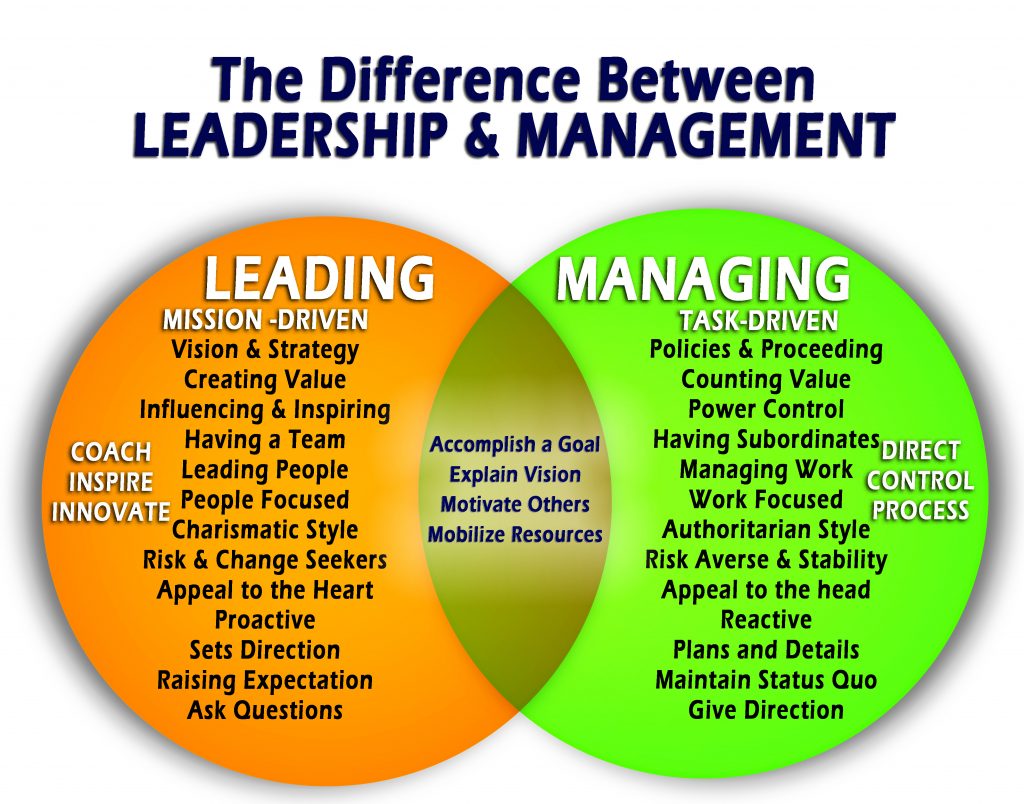
In an ever-increasing competitive workplace, how we show up matters. If you want to get ahead, you must show up as a leader – not only a manager. The difference between leadership vs management is big, and the distinction between the two matters. Not every manager is a leader, and not every leader is a manager, the ability to balance both is a feat many of us aspire to achievement.
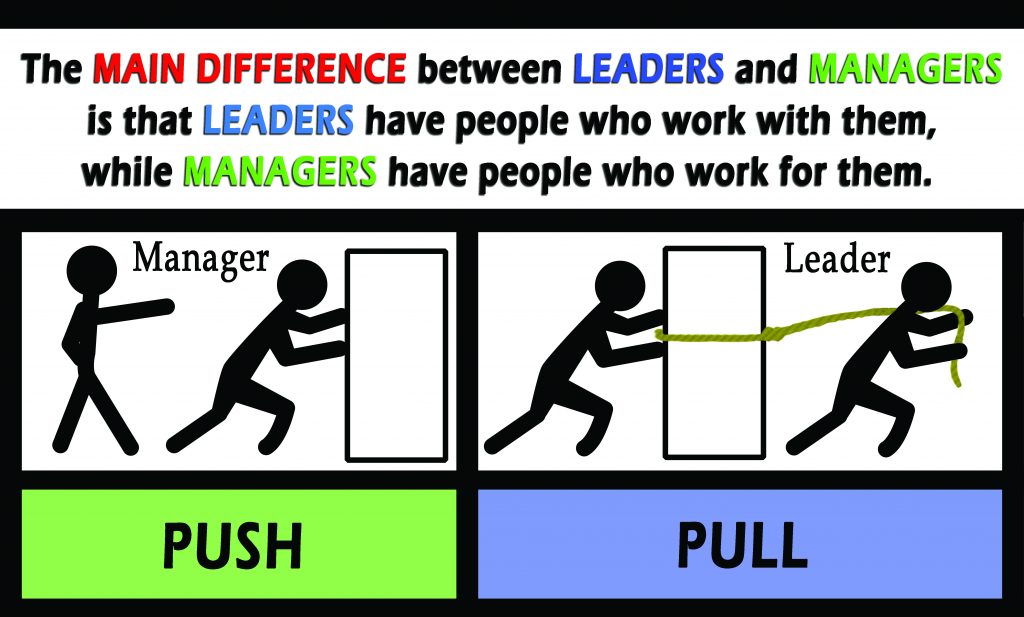
A successful business owner needs to be both a strong leader and manager to get their team on board to follow them towards their vision of success. Leadership is about getting people to understand and believe in your vision and to work with you to achieve your goals while managing is more about administering and making sure the day-to-day things are happening as they should.
What Is Management?
Managers make the business world go around. When goals and objectives are set, managers are the implementers. They get things done. Management requires planning, organizing and controlling the various aspects of projects and the related outcomes. Managers are process oriented. They rely on other people, primarily subordinates, to complete tasks and move projects along. Managers delegate set deadlines and evaluate work product. They also course-correct when needed.

What is Leadership?
Management is an essential skill required to perform effectively. It is also a foundational skill that can evolve into leadership. But leadership is a combination of personal qualities that inspire others to follow. A leader is not a power of authority, but a process of social influence which maximizes the efforts of others toward the achievement of a greater good.
What is true leadership? Many times, when you come across the word leader you see the word follower aligned in some way. Leadership is not about attracting others to follow. This conveys a sense of power, authority, and control that might serve well in the short term by getting others to fall into line through conformity, but it doesn’t create the conditions necessary for sustaining change.
Great leaders don’t tell people what to do, but instead drive them to where they need to be. There is no agenda to create a group of followers or disciples. True leaders know that their success is intimately tied to the project and its results. The path to achieve a goal is predicated on how effective the team responds and interacts with each other and the leader. It is a team approach where each person in the organization knows that he or she has an important role to play. Leadership is all about action not position or title.
Some of the best leaders never had a title. What they did have was the tenacity to act on a bold vision for change to improve outcomes and increase performance. These people may be overlooked because they don’t possess the necessary title that is used to describe a leader in a traditional sense. A Leader, from the perspective of society is not a virtue associated by a title, such as manager, director, supervisor, but more by character, presence and action.

The fact that we are surrounded by these people each day both physically and virtually. They are colleagues, mentors, and staff who have all acted to initiate meaningful change in their teams and work environment. These people don’t just talk the talk, but they walk the walk. They lead by example in what might be the most impactful way possible – Leading by Example. These true leaders do not expect others to do what they are not willing to do. The best part is that these unsung heroes do not need a title to make a difference. They also don’t need a title to be a force of change.
If you look on the internet you will find thousands of articles depicting traits and styles of what makes a good leader. For most of us we have identified what traits are important by evaluating our current supervisors and determining what differentiates them from being a good leader. In retrospect we tend to place ourselves in their shoes and begin envisioning how we would do things differently. Our impressions distinguish what attributes we place value on to determine what makes a good leader.
The best leaders work to improve themselves Continuously and do the following on a consistent basis:
Learn
Learning is the work. Great leaders take professional growth seriously as they know there is no perfection in any position, just daily improvement. Leaders make the time to learn and get better daily. They also make their learning visible to inspire others to follow suit. Leaders who love their work are always learning.
Empower
A key element of effective leadership is to empower others to take risks, remove the fear of failure, and grant autonomy to innovate. People that are empowered find greater value in the work they are engaged in. Empowerment leads to respect and trust, which builds powerful relationships where everyone is focused on attaining specified goals.
Adapt
Everything can change in a heartbeat. As such, leaders must embrace a sense of flexibility and openness to change accordingly in certain cases. The ability to adapt to an array of situations, challenges, and pressures are pivotal to accomplish goals. Success in life is intimately intertwined into an organism’s ability to adapt in order to survive. As leaders adapt, they evolve into better leaders.
Delegate
A leader knows the importance of communication and trust. The decisiveness to delegate certain tasks and responsibilities is paramount for team-esteem. It builds confidence in others in their ability as co-leaders of an organization even if they don’t have a fancy title. It also allows leaders to apply more focus to areas of greater importance.
Engage
In the sharing economy there might not be anything more important than information. Leaders understand this fact and develop strategies to authentically engage their clients through multi-dimensional communications, by taking control of public relations, and developing a positive brand presence. Increased engagement results by meeting prospects where they are at, encouraging two-way communications, and becoming the liaison of the brand.
Reflect
It is quite difficult to find a great leader who does not reflect daily on his or her work. Reflection in a digital world can take many forms and results in greater transparency. It is not how one chooses to reflect, but an emphasis to integrate this process consistently that defines a great leader.
Serve
It’s not just what you say, but more importantly what you do. The most effective leaders work constantly to meet the needs of others while building them up in the process. They make it clear that it is not about them. Serving others taps into one’s heart and soul. It is in the moment of service to others that true leaders rise up in esteem, prestige, and industry.
You are in Control
The perception of the term leader is evolving, and it begins with you regardless of your position. As an aspiring leader, setting high standards requires that you develop a strategic and compelling vision for who you want to be and what you want to achieve. It is that vision that will provide you with the drive and perseverance to attain your leadership goals. Herein lies the first key in transforming your world into a better place. Never underestimate the power that you have. You are part of the solution!
Are you interested in learning more about DRDA’s ROBS structure, the BORSA™ Plan? Contact Bryan Uecker by sending an email (bryan.uecker@drdacpa.com) today for a free consultation.
- Published in ROBS 401(k), ROBS 401k Provider, Small Business, Starting a Business
Understanding the Differences Between DOL and IRS Requirements for Qualified Retirement Plans


By: Bryan Uecker
Navigating the regulatory landscape of qualified retirement plans can be complex for plan sponsors and administrators. The Department of Labor (DOL) and the Internal Revenue Service (IRS) play pivotal roles in overseeing these plans, but they have distinct requirements and regulations. Understanding the differences between the two can help plan sponsors ensure compliance and effectively manage their retirement plans.
DOL Requirements:
The DOL primarily focuses on enforcing the Employee Retirement Income Security Act (ERISA), which sets standards for the operation and administration of retirement plans. Some key DOL requirements for qualified plans include:
1. Reporting and Disclosure: The DOL mandates that plan sponsors provide participants with various disclosures, such as the Summary Plan Description (SPD) and Summary of Material Modifications (SMM). These documents inform participants about their rights, benefits, and obligations under the plan.
2. Fiduciary Responsibilities: Plan fiduciaries have a duty to act prudently and solely in the interest of plan participants and beneficiaries. The DOL oversees fiduciary conduct, ensuring that fiduciaries fulfill their obligations and avoid conflicts of interest.
3. Vesting and Participation: The DOL sets rules regarding vesting schedules and eligibility criteria for plan participation. These regulations aim to protect participants’ rights to their accrued benefits and ensure equitable access to retirement savings opportunities.
IRS Requirements:
While the DOL focuses on ERISA compliance, the IRS administers the tax laws related to qualified retirement plans. Key IRS requirements for these plans include:
1. Plan Qualification: To receive favorable tax treatment, retirement plans must meet specific qualification requirements outlined in the Internal Revenue Code (IRC). These requirements cover various aspects of plan design, such as contribution limits, distribution rules, and nondiscrimination testing.
2. Plan Documentation: The IRS requires plan sponsors to maintain up-to-date plan documents that reflect the terms and conditions of the retirement plan. These documents must comply with IRS regulations and be available for review by plan participants and government agencies.
3. Tax Reporting: Plan sponsors are responsible for filing annual tax returns and informational forms with the IRS, reporting contributions, distributions, and other plan-related activities. Compliance with IRS reporting requirements ensures that the plan maintains its tax-qualified status.
Comparison:
While both the DOL and IRS regulate qualified retirement plans, they have distinct areas of focus and enforcement authority. The DOL emphasizes participant protection, fiduciary oversight, and transparency through disclosure requirements. In contrast, the IRS focuses on tax qualification, plan documentation, and compliance with tax laws to maintain the plan’s favorable tax status.
Conclusion:
Understanding the differences between DOL and IRS requirements is essential for plan sponsors and administrators tasked with managing qualified retirement plans. By adhering to both sets of regulations, sponsors can ensure compliance, protect participants’ interests, and maintain the tax-qualified status of their plans. Staying informed about evolving regulations from both agencies is key to successfully navigating the complex landscape of retirement plan administration.
- Published in ROBS 401(k), ROBS 401k Provider, Small Business, Starting a Business
Comparing Self-Directed IRAs vs. BORSA/ROBS

By: Bryan Uecker, QPA, QPFC, AIF, AIFA

Self-directed IRAs and BORSA/ROBS (Rollovers for Business Start-ups) offer distinct approaches to investing in businesses:
Business Involvement
BORSA/ROBS: Requires active participation in business operations, including receiving a salary if deemed reasonable. Structured through a C corporation, which is the sponsor of the retirement plan.
Self-directed IRAs: Passive investment vehicles where IRA owners cannot engage in business management or take salaries. Doing so could violate IRS rules on prohibited transactions.
Tax Considerations
BORSA/ROBS: Subject to regular corporate taxes; UBIT (Unrelated Business Income Tax) does not apply since the C corporation is taxable.
Self-directed IRAs: Income from business activities may trigger UBIT if unrelated to the IRA’s tax-exempt purpose.
Loan Guarantees
BORSA/ROBS: Allows funds to be used as a down payment for business loans, including SBA loans.
Self-directed IRAs: Cannot guarantee loans, maintaining separation between IRA assets and personal liabilities.
Ownership Flexibility
BORSA/ROBS: Enables up to 100% ownership of the business, providing full control.
Self-directed IRAs: Direct ownership risks violating IRA rules if exceeding certain ownership thresholds, jeopardizing tax benefits.
Conclusion: Self-directed IRAs are ideal for passive investors seeking hands-off involvement, while ROBS empowers owners with direct control and tax advantages through a C corporation setup.
- Published in ROBS 401(k), ROBS 401k Provider, Small Business, Starting a Business
Unlocking Success: Navigating the ROBS Journey!

A Persuasive Essay on the Benefits of the ROBS Strategy
By: Eva Jiang, M.B.A., M.S.
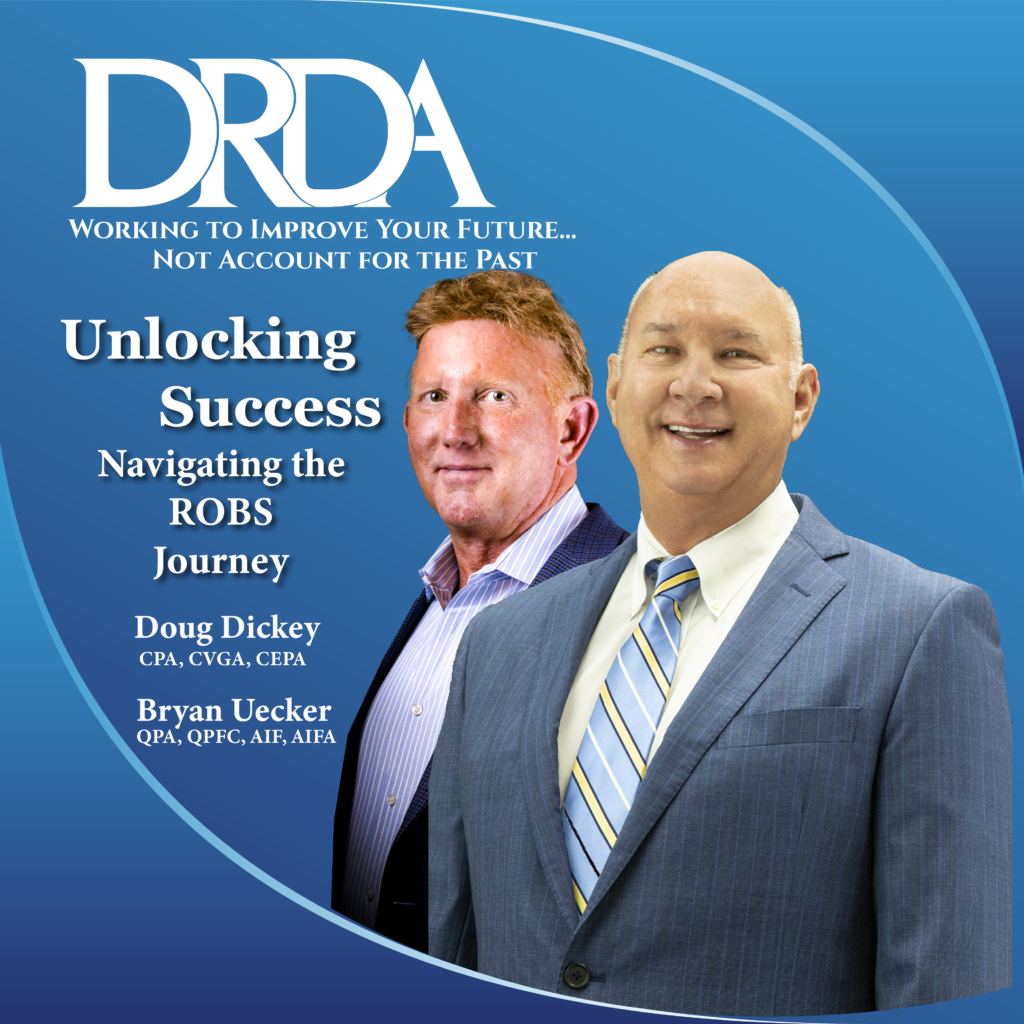
Recently, DRDA hosted an enlightening webinar titled “Unlocking Success: Navigating the ROBS Journey,” aiming to demystify the ROBS (Rollover as Business Start-up) strategy for aspiring entrepreneurs. This essay argues that the ROBS strategy offers a unique and advantageous pathway for individuals to leverage their retirement funds to start or buy a business without incurring taxes or penalties. The webinar provided an in-depth exploration of the ROBS strategy, addressing common concerns and illustrating its potential benefits.
Setting the Stage for Success
The webinar began with the foundational steps necessary to ensure a distraction-free environment, emphasizing the importance of focused attention when dealing with complex financial strategies. Attendees were encouraged to silence their phones and find a quiet place, setting the stage for a productive session. The introduction of the Q&A chat box underscored the interactive nature of the webinar, allowing participants to engage directly with the experts, thereby enhancing their understanding of the ROBS strategy.
Expert Insights and Comprehensive Understanding
The session featured two distinguished speakers: Doug Dickey, a Partner at DRDA with credentials such as CPA, CVGA, and CEPA, and Bryan Uecker, the Retirement Plan Manager with qualifications including QPA, QPFC, AIF, and AIFA. Their combined expertise provided a thorough and reliable foundation for understanding the ROBS strategy. This high level of expertise is crucial for individuals considering using their retirement funds to invest in a business, as it ensures that they receive accurate and comprehensive information.
The Mechanics of the ROBS Strategy
Doug and Bryan explained the ROBS strategy in detail, highlighting its core components: forming a C Corporation, establishing a 401(k) Profit Sharing Plan, and rolling over retirement funds into this plan to invest in a new business. This approach allows individuals to use their retirement funds without incurring the taxes and penalties typically associated with early withdrawals. The ROBS strategy thus provides a viable and advantageous option for entrepreneurs who lack sufficient liquid capital but possess substantial retirement savings.
Addressing Common Concerns
A significant portion of the webinar was dedicated to addressing common concerns and questions from the attendees. These included:
Compliance with IRS Regulations: Ensuring compliance with IRS regulations is a primary concern for anyone considering the ROBS strategy. The speakers provided detailed guidance on meeting all necessary requirements, emphasizing the importance of adherence to avoid legal complications.
Eligible Retirement Funds: The types of retirement funds that qualify for ROBS were clarified, providing attendees with a clear understanding of their eligibility.
Tax Benefits: The tax advantages of operating under a C Corporation structure were highlighted, showing how the ROBS strategy can lead to significant tax savings.
Exit Strategy Costs: Insights into the expected costs of an exit strategy were shared, helping attendees plan for the future and understand the long-term financial implications of their investment.
The Value of Personalized Consultation
As the webinar concluded, DRDA offered attendees an exclusive opportunity for a complimentary one-hour consultation. This personalized advice is invaluable for individuals seeking to tailor the ROBS strategy to their specific circumstances. Such consultations can address unique challenges and provide customized solutions, further enhancing the appeal of the ROBS strategy.
Stay Connected
For those with additional questions, the speakers provided direct contact details. Bryan’s email and phone number were shared, along with a link to schedule a consultation. “We’re here to help you on your journey,” Doug assured, his sincerity resonating through the screen.
Bryan Uecker: bryan.uecker@drdacpa.com | 281-954-6004
Schedule a Consultation: Complimentary One-Hour Consultation
Final Thoughts
As the webinar concluded, there was a sense of accomplishment and excitement. The attendees had gained valuable insights into the ROBS journey, feeling more empowered to take the next steps in their entrepreneurial endeavors. The DRDA team was grateful for the opportunity to share their expertise and looked forward to continuing to support these aspiring business owners.
Thank you to all who joined us. Stay tuned for more from DRDA as we continue to help unlock success in entrepreneurial journeys.
- Published in ROBS 401(k), ROBS 401k Provider, Small Business, Starting a Business
Harnessing the Advantages of the ROBS / BORSA Structure.

PART I: C-CORP
By: Bryan Uecker, QPA, QPFC, AIF, AIFA

ROBS (Rollover as Business Start-up) or BORSA™ (Business Owners Retirement Savings Account) structures are exclusively compatible with C-Corps. This is because only C-Corps permit a 401(k) profit-sharing plan to serve as a shareholder. Upon discovering this exception, some prospective clients may feel disappointed, as the C-Corp often carries a stigma of “double taxation”. Historically viewed as “the entity choice of last resort” due to potential for double taxation resulting from corporate-level taxes and subsequent taxation upon distribution or liquidation. The good news is that C corporations present unique tax advantages that S corporations and partnerships cannot replicate.
To debunk the stigma of “double taxation” right up front, a helpful chart compares the corporate tax and dividend tax to profits through a pass-through entity at a personal tax rate of 37%:
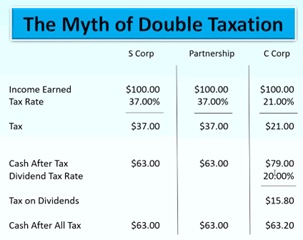
So the issue is not how many times you are taxed……but rather how much tax you pay.
Now that we have cleared up the myth, here are ten benefits of a C-Corp:
1. Lowering Overall Tax Burden: C Corps can achieve significant tax savings thanks to a single flat corporate tax rate of 21%. By proactively managing dividends and salaries, business owners can optimize their tax burden, generally resulting in lower overall taxes than pass-through entities.
2. Flexible Fiscal Year: C Corps can choose their fiscal year, unlike LLCs and S Corps. This allows for better timing of income recognition and expense deductions, enabling shareholders to further minimize their tax burden.
3. Retaining Earnings for Growth: C Corps can reinvest profits within the company at a lower tax cost. Unlike S Corps, where profits are passed through to shareholders and taxed regardless of distribution, C Corps can retain earnings to fuel future expansion without immediate tax consequences.

4. Deducting Salaries and Bonuses: Shareholders of C Corps can receive salaries and bonuses, which are deductible expenses for the corporation. Businesses can optimize tax efficiency and mitigate double taxation concerns by structuring compensation packages appropriately.
5. Tax Write-offs for Fringe Benefits: C Corps can deduct 100% of medical premiums and other fringe benefits provided to employees. This includes health, long-term care, and retirement plan contributions, offering substantial tax savings opportunities for the corporation and its employees.
6. Charitable Contributions Deduction: C Corps can deduct charitable donations as business expenses, subject to certain limitations. This benefits worthy causes and provides tax advantages for the corporation, with the option to carry over excess contributions to future tax years.
7. Gaines: C Corps are taxed at a flat 21% on short-term and long-term gains so you no long have to carry economic risk to get to a lower tax bracket. You sell you capital asset when it is best for you. C Corps can carry forward capital and operating losses indefinitely to offset future profits. This flexibility allows businesses to smooth out tax liabilities over time, particularly during growth or economic downturns.
8. Fewer Ownership Restrictions: Unlike S Corps, which have strict ownership rules, C Corps can have unlimited shareholders, issue multiple classes of stock and be owned by anyone or anything. This flexibility facilitates equity financing and business expansion without the constraints imposed by S Corp regulations.
9. Favorable Treatment for Passive Investors: Passive investors in C Corps benefit from the inability to pass losses through to individual tax returns. Unlike S Corps, where active participation is required to claim losses, passive investors can still enjoy tax advantages without direct involvement in management.
10. Unique Financing Opportunities: Registering as a C Corp opens doors to diverse financing options, including public offerings and innovative strategies like 401(k) business financing, such as ROBS or BORSA™ plans. These financing avenues give businesses access to capital while minimizing debt obligations, offering a valuable alternative to traditional lending sources.
With over four decades of experience, DRDA, LLC has focused on supporting entrepreneurs in initiating, expanding, and selling their businesses. Leveraging our proficiency in accounting, business consulting, and retirement plan design, we harness the advantages of the ROBS/BORSA™ structure to benefit our clients throughout the operation of their business and at their succession transition or exit of their business, not just at formation.

By: Bryan Uecker, QPA, QPFC, AIF, AIFA
- Published in Business Lending, ROBS 401(k), ROBS 401k Provider, Small Business, Starting a Business
Discovering Financial Excellence: Why DRDA’s Tailored Solutions Stand Out
By: Eva Jiang, M.B.A., M.S.
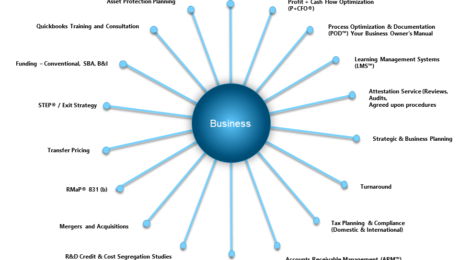
Looking for financial services that exceed expectations? Look no further than DRDA. Our comprehensive range of services encompasses tax planning and compliance, audit, accounting, bookkeeping, QuickBooks, 401(k) plan, Third Party Administration, BORSA® implementation, Operation and Exit, Profit and Cash Flow Optimization (P+CFO®), and Business Value Acceleration.
DRDA Wheel of Services
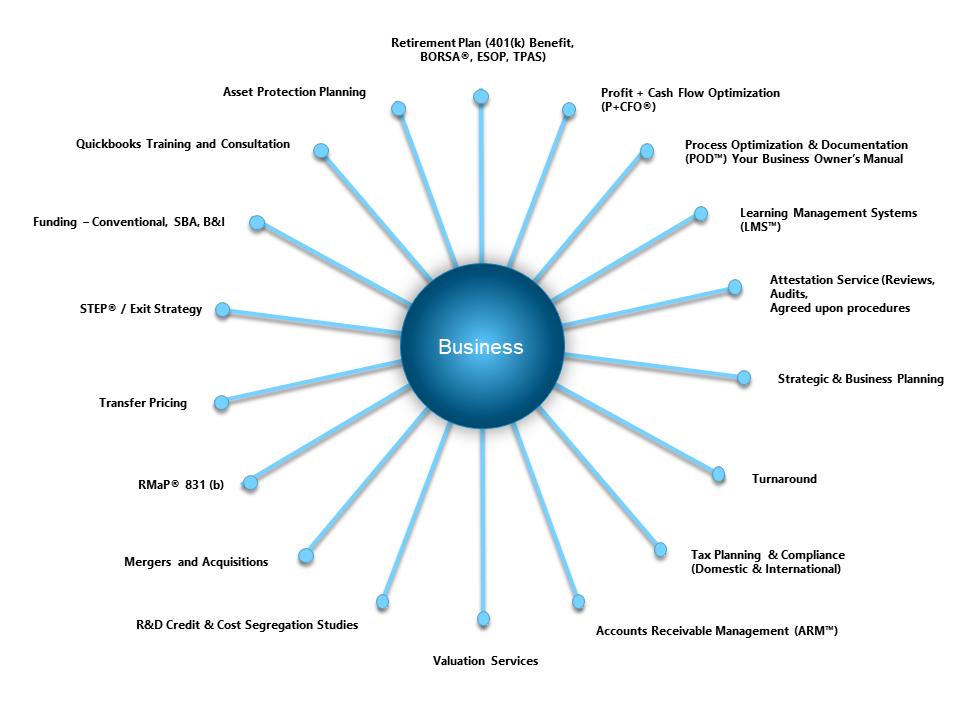
Because of our commitment to professionalism and uniqueness, we offer several trademarked services, including RMaP, BORSA, STEP, P+CFO, ARM, POD and LMS. At DRDA, we pride ourselves on our ability to make a difference in our clients lives. These trademarked services represent our dedication to providing cutting-edge solutions that are tailored to the needs of each client.
When you choose DRDA, you’re not just getting cookie-cutter solutions. Our team understands that every business is unique, which is why we take the time to truly understand your individual needs. We believe in open communication and collaboration across departments, ensuring that your experience with us is seamless and efficient.
Our tax services cover everything from planning and compliance to resolution, helping you navigate complex tax laws to minimize liabilities and maximize savings.
Our accounting services are tailored to your specific needs, providing accurate and reliable financial reporting. From auditing, assurance and financial statement preparation to budgeting and forecasting, our team helps you understand and trust your business information systems.
Our bookkeeping services ensure that your financial records are organized and up-to-date, allowing you to focus on what you do best – running your business. And if you use QuickBooks, our consultants can optimize your software usage, from setup and customization to training and ongoing support.
In addition to traditional services, our business advisory team offers strategic guidance to drive growth and profitability. Whether you need help with TPAS (Third-Party Administrative Services), retirement plan, BORSA® implementation (ROBS), business planning, performance analysis, or risk management, we’ve got you covered.
At DRDA, we don’t believe in a one-size-fits-all approach. DRDA Business Solutions are tailor-made for your business, saving you time and money while ensuring maximum efficiency and effectiveness.
Of the more than 46,000 CPA firms in the United States, DRDA has been recognized as one of the Top 500 CPA Firms in the United states by Inside Public Accounting, DRDA is ready to serve you. Visit our website at www.drdacpa.com to learn more about how we can help you and your business succeed and thrive.
By: Eva Jiang, M.B.A., M.S.
- Published in P+CFO™, ROBS 401(k), ROBS 401k Provider, Small Business, Starting a Business, Tax
Finance Your New Business During the Pandemic

BORSA, finance your new business during the pandemic
How can you make BORSA work for you? Now may be a great time to explore ROBS, or the Rollover Business Startup Solution and what it can do for you during the pandemic.
Key Points
- Start a new business or franchise
- Legally pay yourself a salary
- Abide by IRS and ERISA guidelines
What is the BORSA Plan?
The BORSA (Business Owners Retirement Savings Account) is DRDA’s, LLC Solution otherwise known as ROBS (Rollover Business Startup Solution), an IRS and ERISA approved structure that allows investors to use their retirement funds for a new business or franchise that they will be personally involved in. It is the primary way a retirement plan holder can have personal involvement in a business utilizing their retirement funds, without triggering IRC prohibited transaction rules.
Setting up a BORSA Plan requires planning but can be accomplished in relatively few steps.
- Set up a C Corporation – The process begins by establishing the new corporation, using the proper legal structure to support the establishment and operation of the company’s qualified retirement plan.
- Rollover your funds – Transfer your funds from an old IRA or 401(k) plan into a new 401(k) plan that the stock of the start-up C corp. business sponsors or adopts.
- Start earning a salary – You must be an employee of your new business and provide a legitimate service. Your compensation must come from your business.
How Do BORSA and Pandemic Relate?
While there’s a pandemic, millions are losing their jobs and joining the ranks of the unemployed. More than ever, many are trying to rely on themselves and not some corporate entity that must make difficult decisions to comply with federal and state mandates affecting individual earning, security, and livelihood. Using BORSA can be an ideal way to start the business of your dreams with money you already have.
BORSA can help you fund a new business or franchise with retirement funds, and that means you’re starting on your way to owning and fulfilling your goals. When COVID-19 hit, no one could have anticipated it would bring the unprecedented upheaval of everyday life that it has.
How Does BORSA Work?
The BORSA Plan allows an investor to create a C Corporation, and the C Corp’s profits are taxed separately from the owner as it is owned by shareholders. Next, funds are transferred from an old IRA or 401(k) plan. Then, as an employee providing a legitimate service, you are able to earn a salary at the business you’ve created.
There are very specific IRS and ERISA rules that have to be followed, and for this reason guidance is recommended. DRDA, LLC can help you get started. When it’s time for your new company’s stock to get valuated by the IRS, DRDA, LLC will help value the stock of the new or existing company.
BORSA Benefits
More than almost anything else, Americans are looking to make certain they can make it through the pandemic, civil unrest, and the whole of the current situations currently embroiling the nation. For those who have lost their jobs and have been unable to find replacement work, tapping into their retirement funds have been one source of income to help. But what happens when the funds have been depleted?
More than just taking funds out, though, BORSA can help you open a franchise or start a new business you can own yourself. Your money is helping you and your family first. The primary benefit of using the BORSA Plan is that you can employ it to use your retirement funds to invest in a business you will be personally involved in. You can do this without paying tax on the retirement funds you wish to use as a distribution.
Additionally, investing in yourself within your retirement portfolio is an excellent way to diversify. Your investments in traditional assets such as stocks and bonds, and alternative assets such as cryptocurrency, exist separately, and you can fund your own business as well. This may protect investment portfolios as a whole during times of unrest and market volatility,
During the COVID-19 and now the Delta Variant financial crisis, it’s important to know where your money is and what it’s doing. While investing in the market and traditional assets can bring you financial success, it’s very volatile at this time. Alternative assets like real estate can help diversify your portfolio. And using the BORSA Plan to fund your dreams can help you even more.
If you are interested in receiving more information on the BORSA™ plan, DRDA, LLC will be hosting a webinar on September 8th and 9th, 2021.
Click Here to sign up and access this FREE webinar.
- Published in Business Lending, ROBS 401(k), ROBS 401k Provider, Small Business, Starting a Business, Uncategorized
Using 401(k)/IRA Funds to Start or Buy a Business

Using Rollovers for Business Start-ups (ROBS) such as DRDA’s, LLC BORSA™ Plan
to finance a business isn’t new, but it is unfamiliar to many. As a result, there are a lot of myths swirling around about the use of ROBS structures that may be stopping would-be entrepreneurs from chasing their dreams.
BORSA Plans involve using money from an eligible retirement account to finance the purchase of a business or franchise. To summarize, a corporation is formed, and that corporation then sponsors a 401(k) plan. Funds are rolled from an existing retirement account into the new 401(k) without triggering a taxable distribution. This new 401(k) purchases (or invests in) shares of the corporation, which can then purchase a business or franchise.
In essence, a BORSA™ Plan allows you to invest in your own business where you have control rather than investing in the market where you have no control. Here’s the truth behind the most common ROBS myths:
- It’s not tax avoidance.
Using a BORSA™ Plan isn’t a way to evade taxes by any means. The Employee Retirement Income Security Act of 1974 (ERISA) was set up explicitly to encourage investment in small businesses – businesses that pay taxes. - BORSA™ Plan is an investment, not a loan.
With a BORSA™ Plan, you’re investing in your new business or franchise, not taking on debt. This means you won’t have to make monthly loan payments or incur interest. - You can use a BORSA Plan to diversify your nest egg.
You don’t have to take every penny from your existing retirement fund for a BORSA™ Plan to work. Many people only use a portion of their retirement assets, and this arrangement can be used in conjunction with a small business loan or other financing option. So, you can diversify your investments. - Getting funded using a BORSA™ Plan can take as little as four weeks.
Depending on the state in which you’re filing, and how fast you’re able to file the necessary paperwork, funding can take as little as a few weeks. Most are completed in less than 30 days. - BORSA Plans are not the same as Self-directed IRAs.
While it’s possible to finance a business with both self-directed IRAs and a BORSA™ Plan, there are some major differences between the two. If you use an SDIRA, the owner may not work for the business or take a salary. The investment amount is also potentially liable for the unrelated business income tax (UBIT), which can get very expensive. With the BORSA™ Plan, the 401(k) owner must work for the new business, and UBIT doesn’t apply. - A BORSA™ Plan can be used to fund start-ups.
A BORSA™ Plan is a great option to finance not only start-ups, but also purchases of existing businesses and franchises.
To some, the BORSA process can appear to have complex rules and regulations. But if you have a qualified retirement plan with a balance that’s sufficient for your start-up needs and work with an experienced company to support its formation, it can be a great option to start or re-capitalize your business debt-free.
Are you interested in learning more about DRDA’s, LLC ROBS structure, the BORSA™ Plan? Give our experienced team a call today 281-488-2022 for a free consultation
- Published in ROBS 401(k), Small Business, Starting a Business, Tax, Uncategorized
How to Use Retirement Funds, Tax and Penalty Free, to Purchase a Business

For most entrepreneurs, the most difficult part of starting a business is not coming up with an idea but financing the start-up. Over the past few years, many lenders have tightened their requirements for small business loans, leaving some would-be owners out in the cold. Another option is available, namely using your retirement funds to finance a business startup or providing the equity lenders need to make a loan.
In most instances using retirement funds will incur taxes and penalties, however there are three ways in which you can avoid both:
- Using a Roth IRA if you are over age 59 and the Roth IRA has been open at least five years
- 401(k) Loan Option
- Using a BORSA plan also known as Rollover on Business Startup Solution (ROBS)
Roth IRA
Taking a Roth IRA distribution may not be the most efficient way to fund a business, but it does have a potential advantage as it could help avoid taxes on the gain from the money used.
401(k) Loan Option
Some 401(k) plans allow you to borrow against your retirements account. This feature works well only if a small amount of money to start a business is required. Plans with this option allow participants to borrow the lesser of $50,000 or 50% of the vested value of your plan assets. The loan must be fully repaid within five years, via payments that are at least quarterly, at market interest rates.
ROBS
ROBS is the most flexible way to fund a fledgling business. To understand this structure you have to understand provisions of the Employee Retirement Income Security Act (ERISA) and the Internal Revenue Code (IRC). The plan should be approved by both the Department of Labor (DOL) and the Internal Revenue Service (IRS). This approval comes in the form of a Favorable Determination Letter from the IRS.
This method is a great way to fund a business, especially if more than $50,000 in a qualifying retirement account is available. If less than $50,000 is available, taking a loan against the investment may be a better option. ROBS may be used for business acquisition, working capital or as a down payment for additional financing. If you meet the criteria, it is usually the most cost-effective method, plus there is no requirement to repay the money especially in those early years of operation.
Setting up a ROBS involves rolling over a pre-tax IRA or 401(k) plan account into a new 401 (k) sponsored by a “C” Corporation. The rollover funds are then invested into the stock of the “C” Corporation. The account holder can then earn a reasonable salary as an employee of the business.
Starting or buying a new business is complicated. Using your retirement money to fund a business is a viable option but also adds a layer of complexity that you need to understand. Your best plan of action before you do anything is to consult with someone who understands the pros and cons of each of these options. DRDA, PLLC – CPAs has provided these services to thousands of entrepreneurs and we would be happy to discuss this option and help you determine what method works best for you. Contact us to learn more about BORSA (Business Owner’s Retirement Savings Account), our exclusive ROBS plan that allows investors to access their 401(k) funds tax and penalty free.
- Published in ROBS 401(k), ROBS 401k Provider, Starting a Business